The problem
Competitor prices and stock were checked by hand on each website, and a check could take hours. Prices could not be compared until someone confirmed that a competitor's listing was the same product as ours, so the comparison was slow and easy to get wrong.
What I built
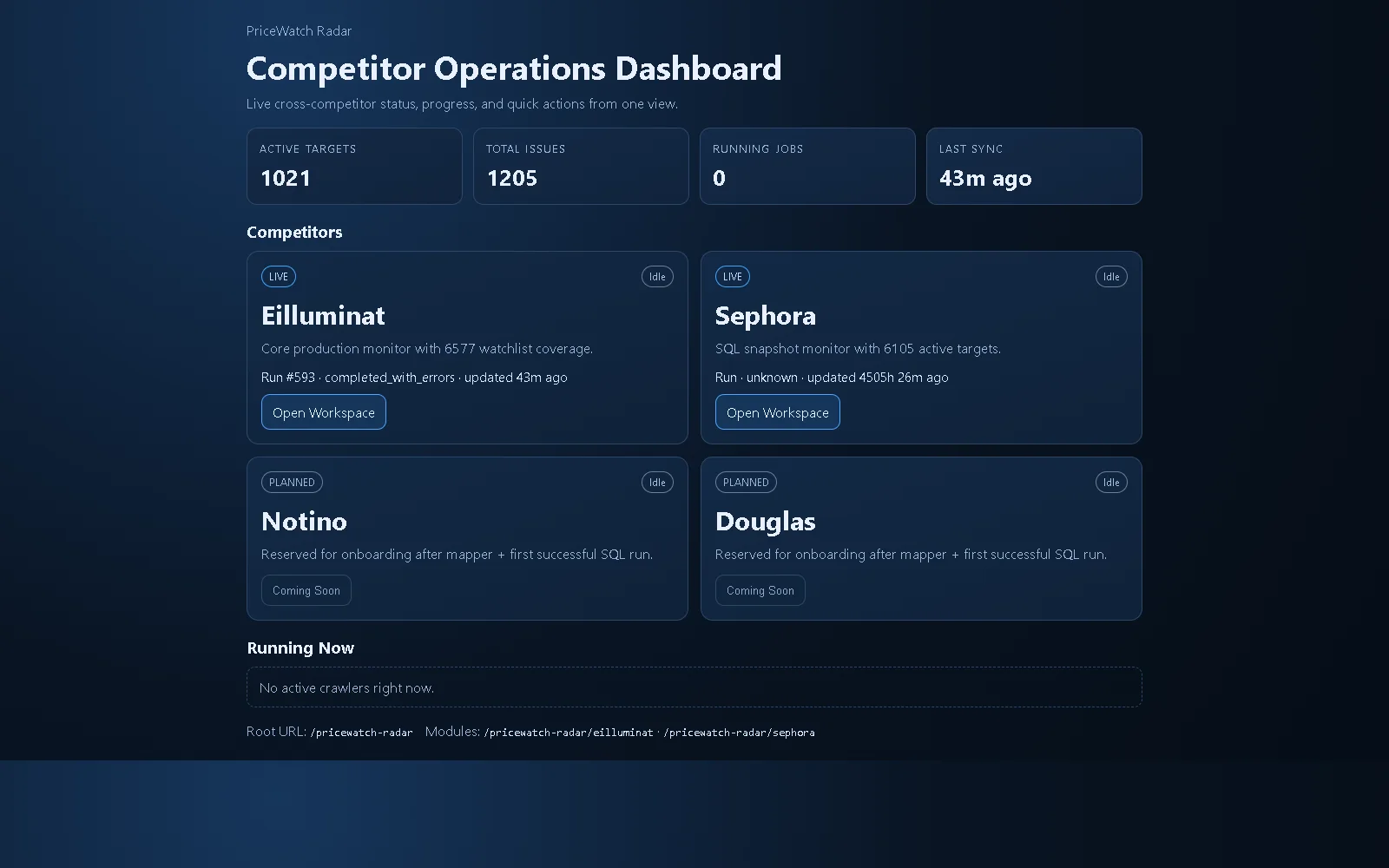
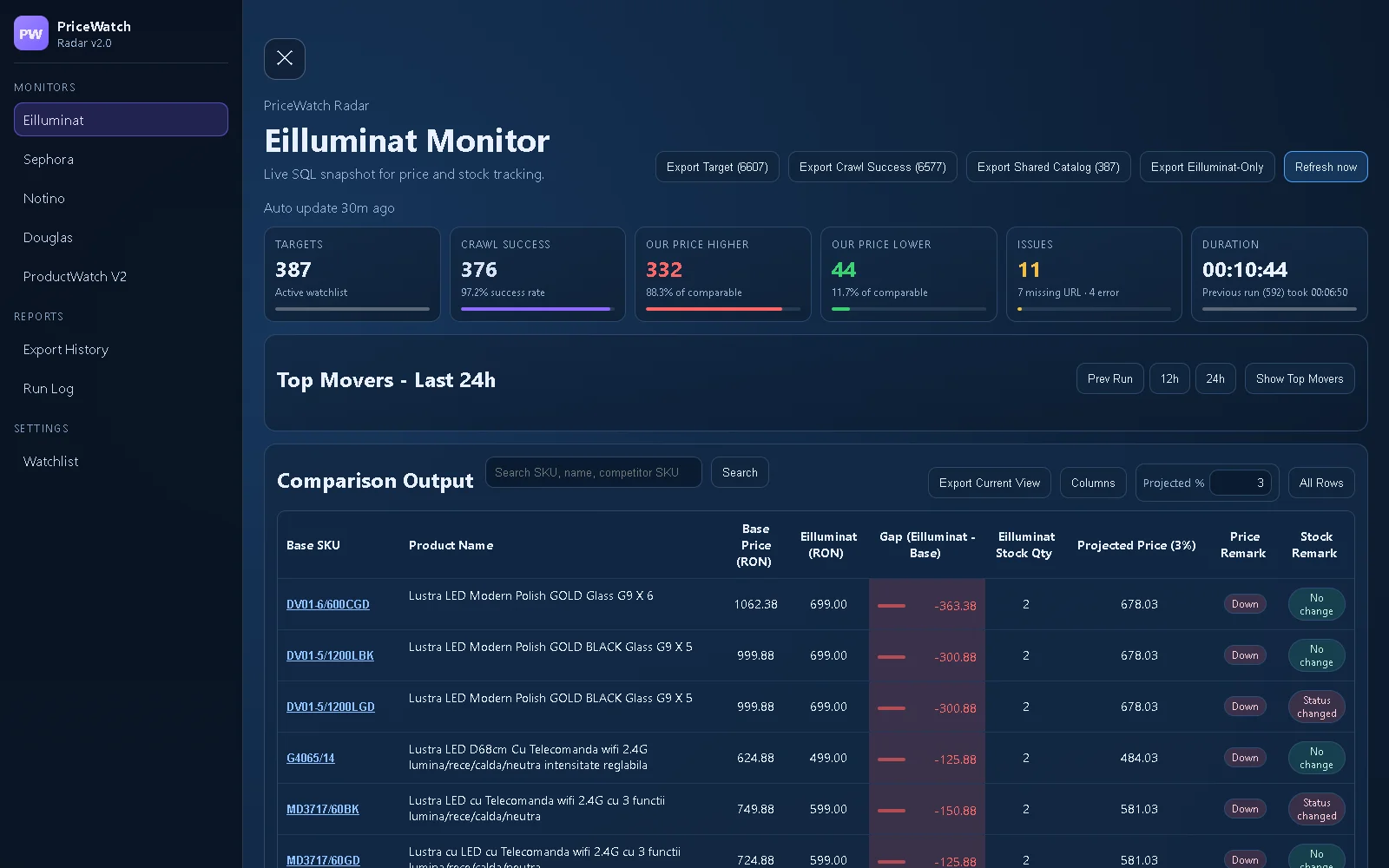
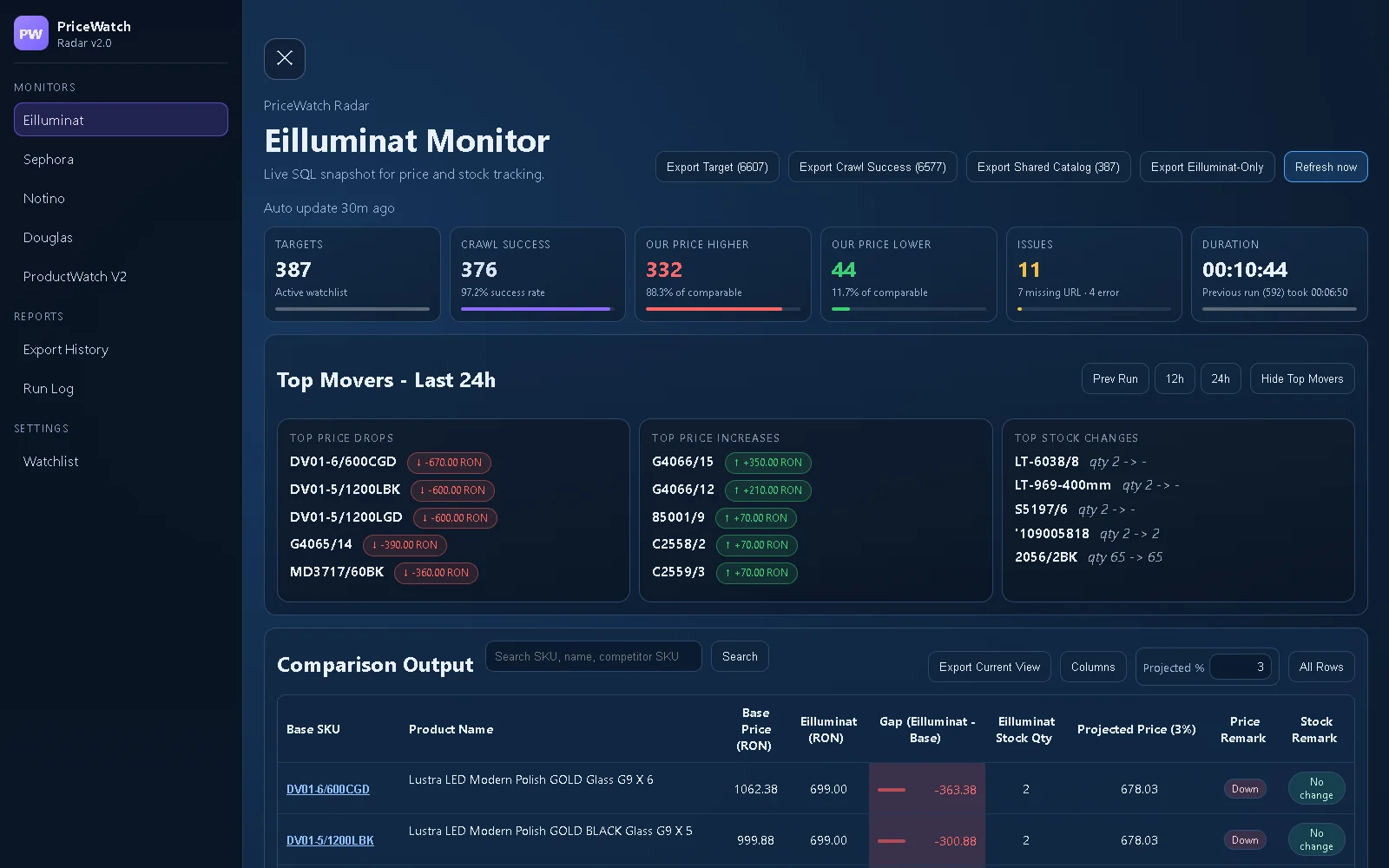
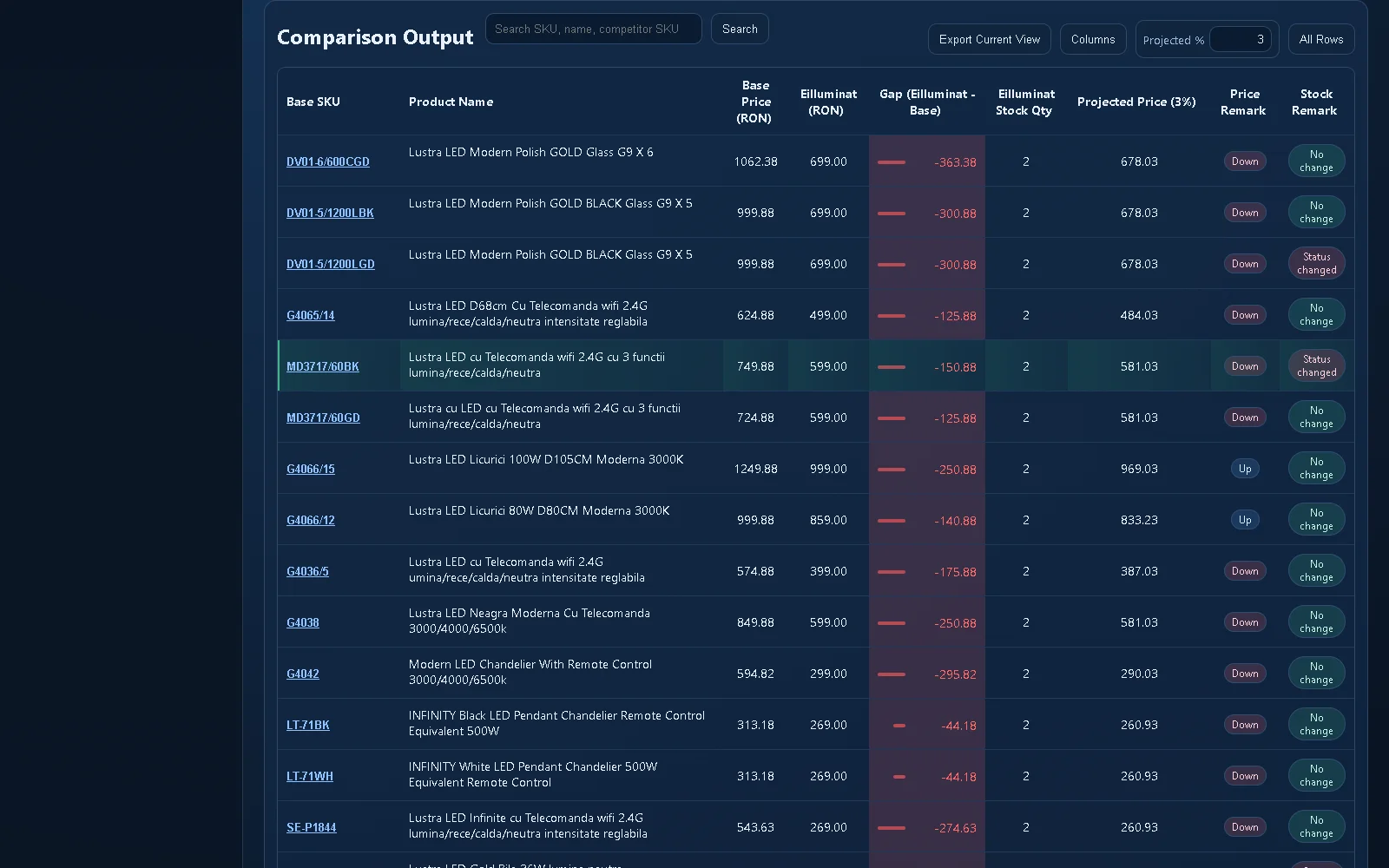
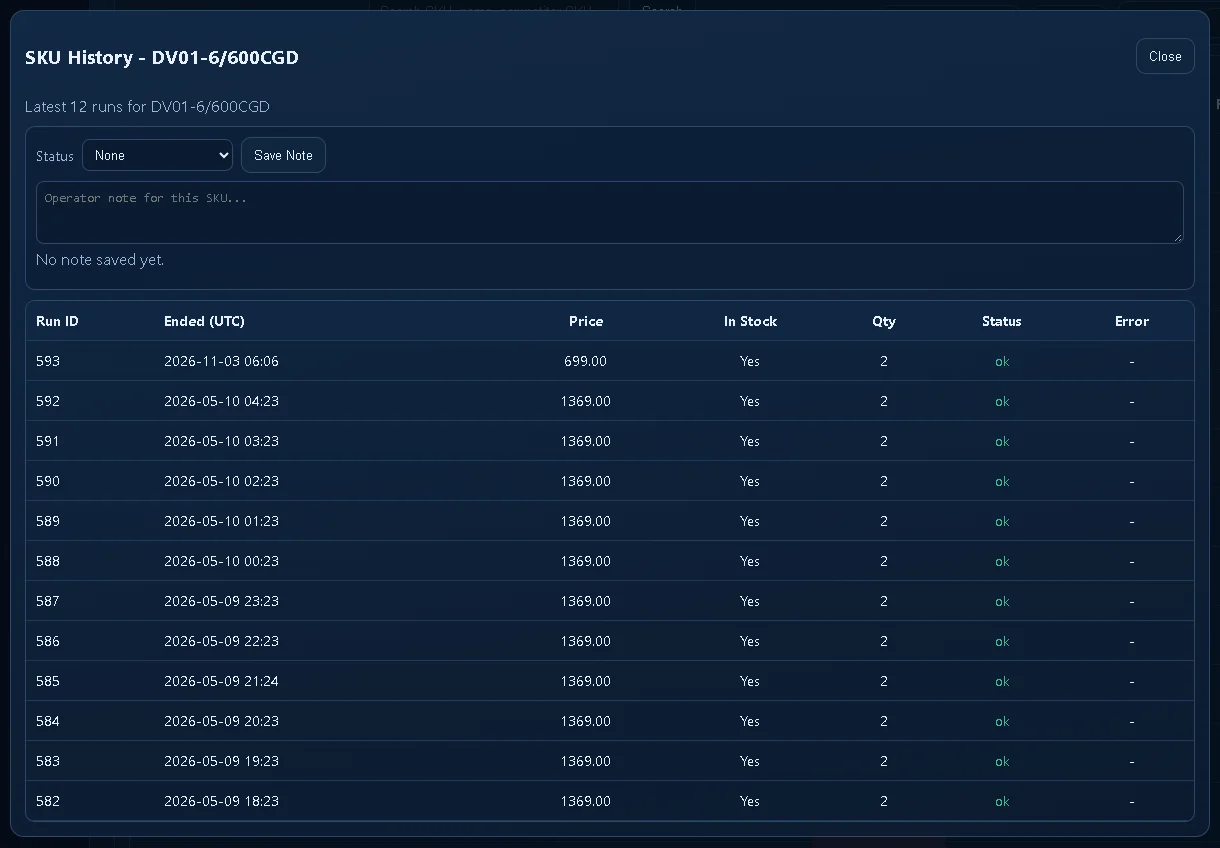
- Competitor workspaces: one board with a workspace per competitor. The Eilluminat workspace has a price comparison table, top movers, issues, and a history popup for each product code.
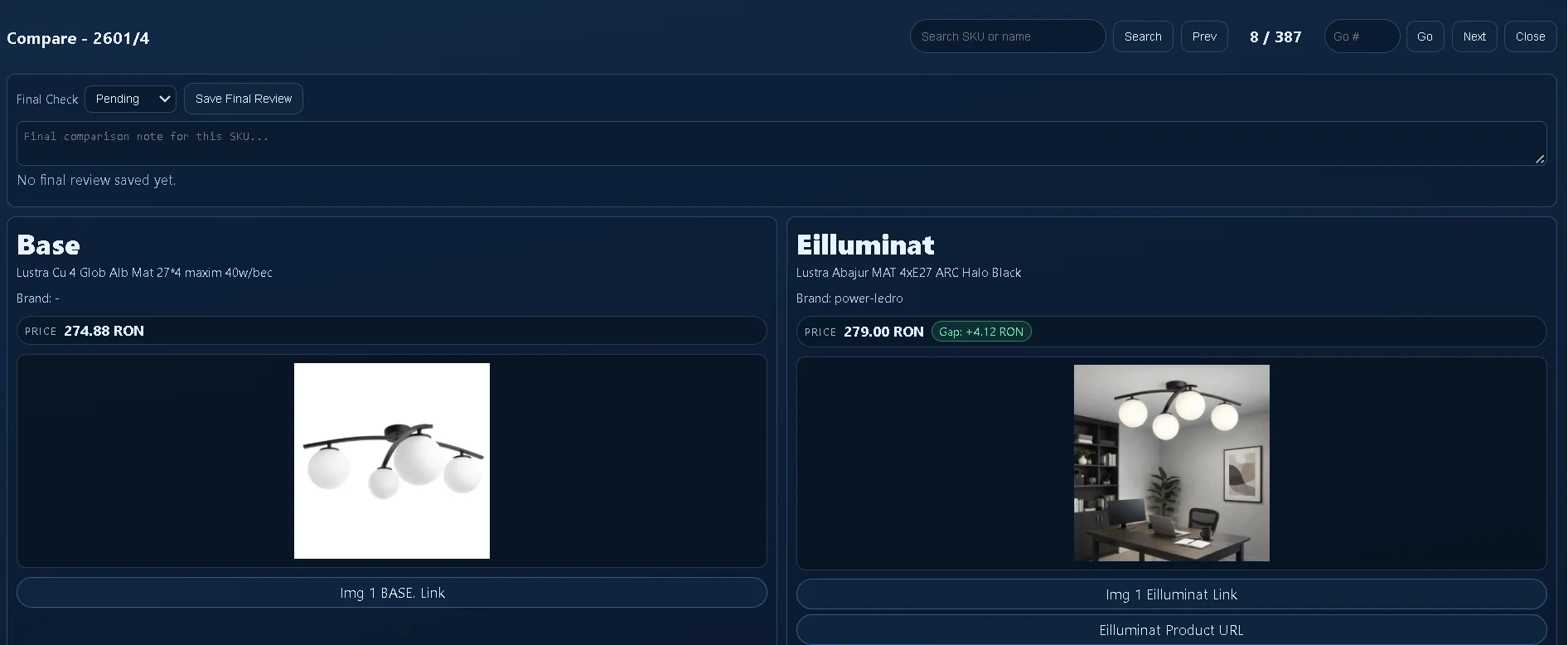
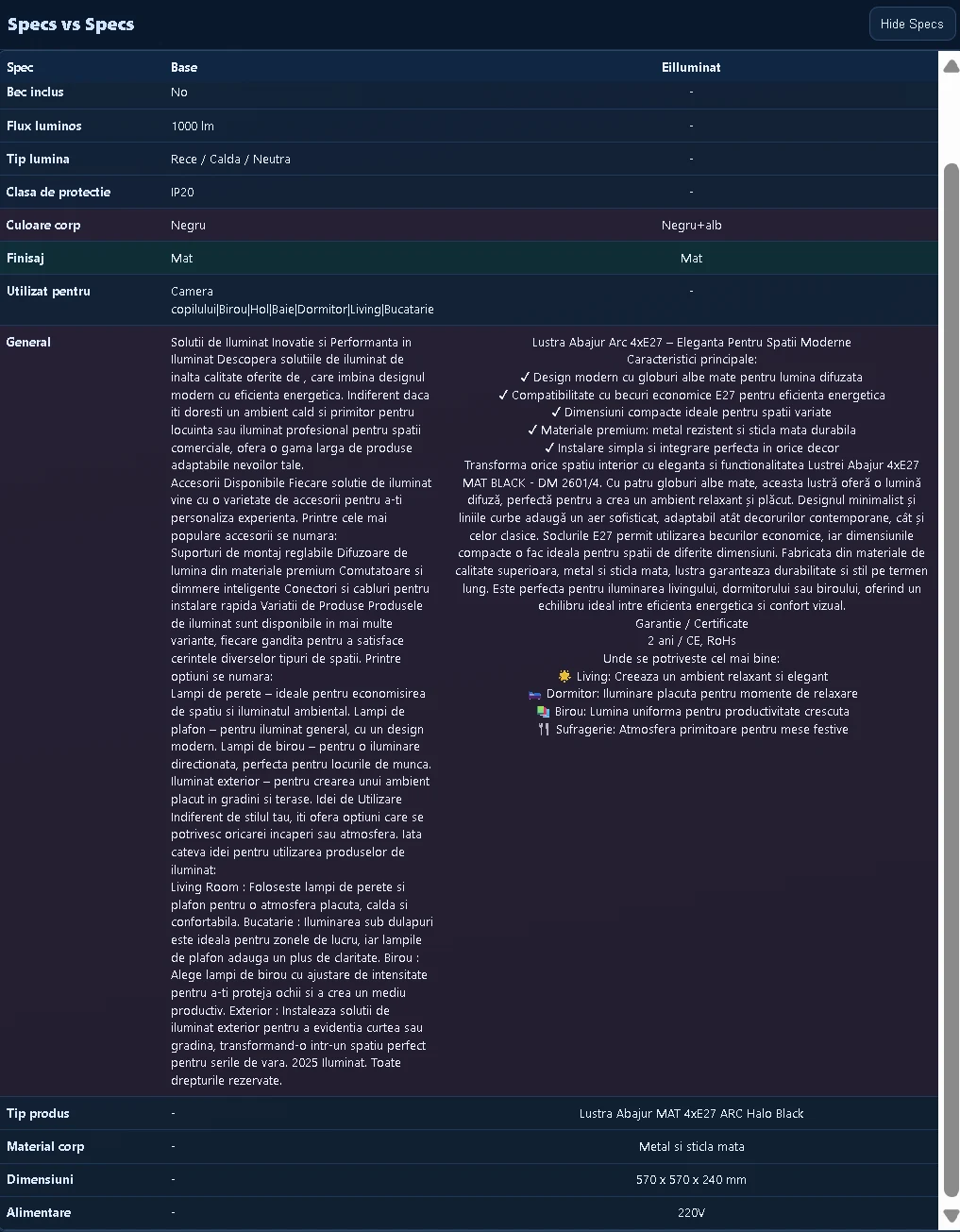
- Product matching: a Compare page shows our product and theirs side by side, with specs and pictures, and a person saves a final decision (match, not a match, or unsure).
- Cosmetics matching: for Sephora and Douglas, each pair goes through four checks (product identity, size in ml or g, picture, and shade or edition), with different rules for fragrance, makeup and skincare. The AI reads both pictures and the text but never approves a match on its own; a person makes the final decision.
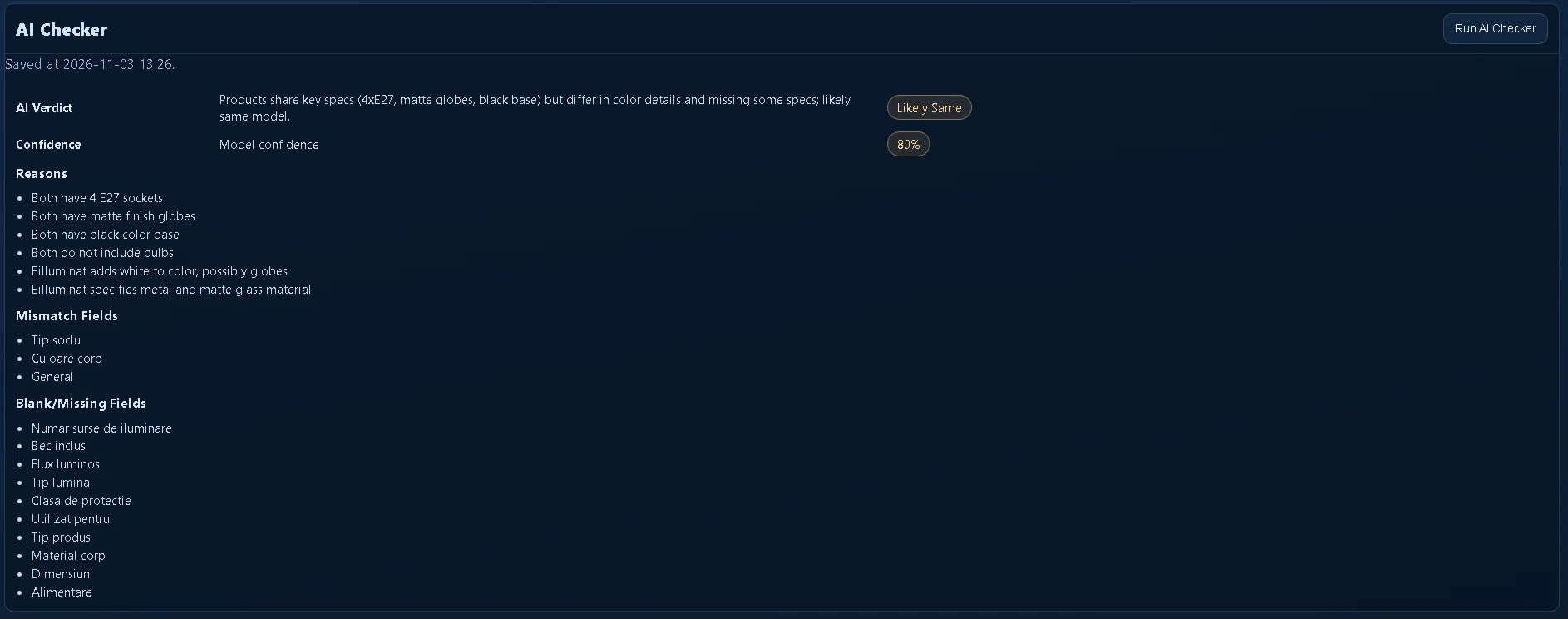
- AI Checker: it reads a product pair and returns a verdict (same, likely same, different or unclear) with a confidence figure, the reasons and the mismatched fields. A person reviews it.
- Crawlers: Python browser-automation crawlers collect listings and prices into PostgreSQL. They can pause and resume without losing progress.
How it works
- Competitor websites
- Crawlers
- PostgreSQL
- Compare and AI Checker
- Person's final decision
- Dashboard and exports
Crawls can be started from the dashboard and resume where they stopped. Matching decisions are made by a person, with the AI Checker as a second opinion.
What it changed
Leadership checked the dashboard daily, and the competitor information informed price adjustments, product investigations and stocking decisions. The Compare page and the AI Checker made it quicker to confirm that two listings were the same product, with a person still making the final call. Checks that could take hours showed up in seconds or minutes (my estimate).
My role
I designed and built the workflow end to end, with AI-assisted development, from the crawlers and database to the dashboard, the Compare page and the AI Checker.
Skills shown
Web crawling with Playwright, PostgreSQL, Python, product data matching, review workflows, using OpenAI in a tool with a person checking the result, working with AI tools.